
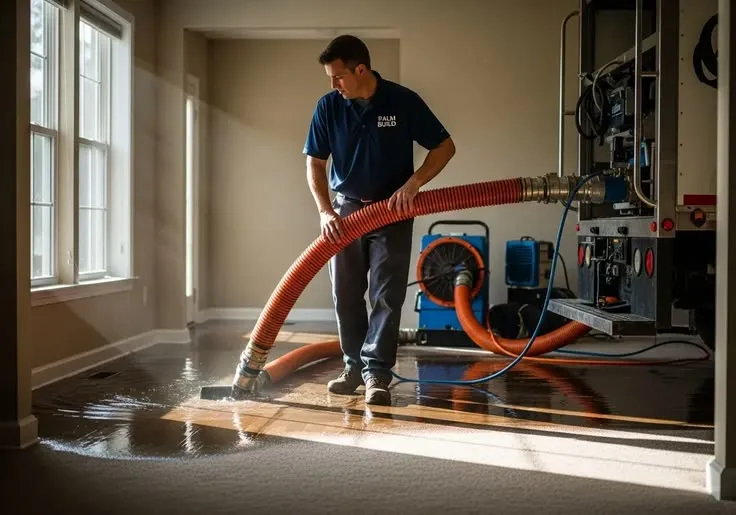
Wet carpet, damp walls, a hum you cannot ignore. That is what a home sounds like during drying. It is a strange sound at first. Many owners in Towson are surprised by how long it lasts and how many machines show up. Nobody warns you ahead of time.
Knowing the steps makes the days easier. A skilled team offering Water Damage Restoration Towson MD will explain each stage before it starts. Here is a plain look at what to expect, from the first visit to the final reading.
The Walk-Through and Moisture Mapping
A technician walks the whole space first. Using a moisture meter, they test floors, walls, and ceilings and mark the wet areas. Some crews use a thermal camera too. The goal is a map of where water went, since it rarely stays in one spot.
After mapping, the team starts Emergency Water Cleanup Towson MD work. Standing water is pumped out and soaked items are removed. Wet padding and ruined drywall often go first. It feels harsh to see it hauled away, but leaving it behind slows drying and invites mold.
Setting Up Air Movers and Dryers
Next come the air movers. These loud fans blow air across wet surface to speed up evaporation. Crews place them at angles aiming along walls and floors. Placement matters more than people think. A fan in the wrong spot just stirs the room.
Special tools handle tricky spots. Small holes may be made in walls so warm air can flow inside. Mats can pull moisture out of hardwood floors. Not every home needs all of this. Ask the crew why each tool is there. The moisture map tells them what to use and where.
How Dehumidifiers Pull Out Moisture
Fans move water into the air. Dehumidifiers take it back out. Simple science, really. Warm, damp air passes over cold coils, and the moisture drips into a tank or a drain line. The drier air then goes back into the room and picks up more.
Think of it as a sponge and a wringer. The air soaks up water, then the machine squeezes it out. Large homes may need several units. Windows and doors usually stay shut, so the machines can focus on the wet air inside.
Daily Checks and Moving Equipment
Technicians return each day to read the meters again. They compare numbers to a dry standard, often taken from a dry spot in the same home. If a wall is still high, they adjust the fans or add a dryer.
Machines get moved as areas dry out. Sometimes a room that seemed done shows a new wet spot behind furniture. That is normal. It is why daily readings beat a one-time check. Notes and photos help prove progress to your insurer.
Living in Your Home During Drying
Expect noise and warmth. The equipment can run all day and night, and the air may feel dry. Many families get used to it by day two. A white noise machine can help. If the sound keeps you up, ask whether a few fans can be paused overnight.
Power use goes up, so plan for a higher bill that month. Keep kids and pets away from cords and machines. Do not turn units off or move them. A small change can leave a wet pocket behind. Call the crew if something seems off.
Knowing When the Job Is Done
Drying ends when readings match the dry standard, not when the surface feels dry. A floor can feel fine and still hold water below. The crew records final numbers, removes equipment, and often gives you a written summary.
Repairs come after. New drywall, paint, and flooring go in only once everything is dry. Rushing this can trap moisture and cause mold again. Skipping the last check is a common mistake. Ask for the final readings in writing. They are your proof that the structure is truly ready.
Conclusion
Drying is not glamorous, but it is the step that saves the house. Loud fans, steady machines, and daily checks all have a purpose. Ask questions early and often. For help, visit movefastrestoration.com and talk with a team that can explain the schedule in plain words.
Act quickly after a leak or flood. A trusted team offering Water Damage Restoration Towson MD can start the process in hours. Emergency Water Cleanup Towson MD should begin right away, before damp spreads. Patience during the drying days will pay off for years.